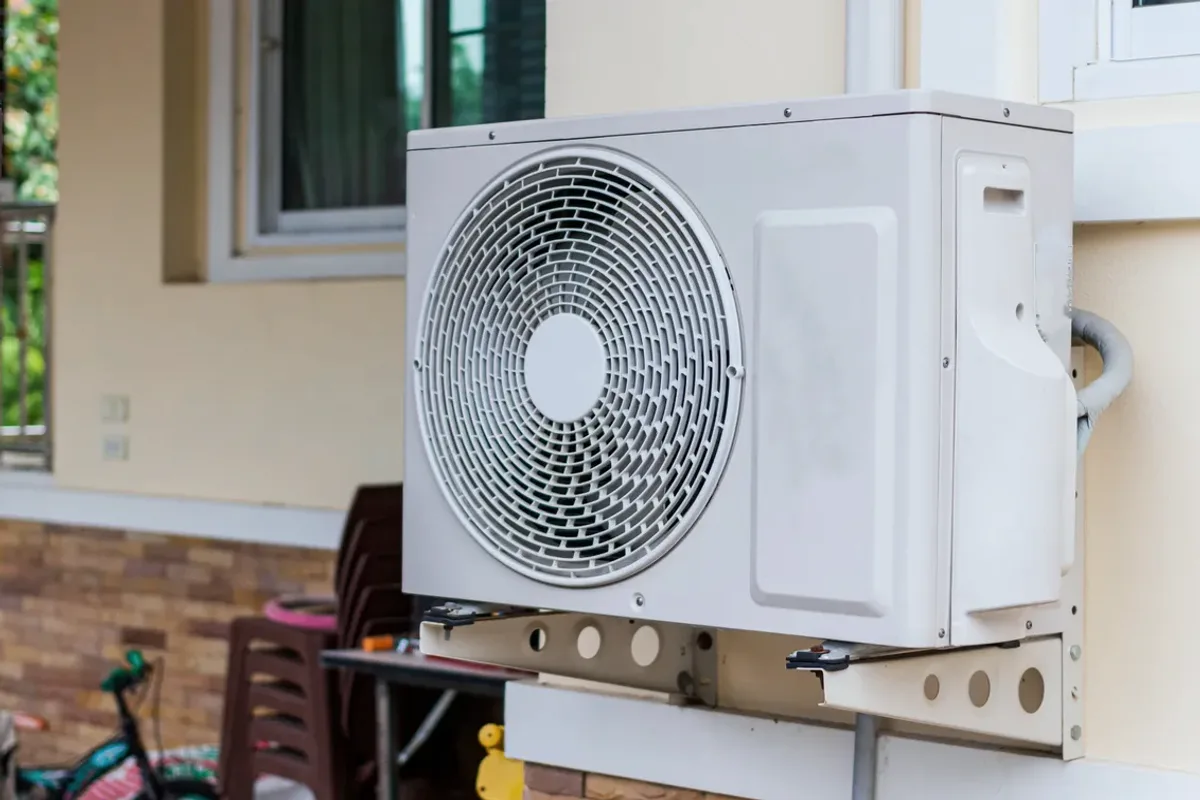
For a heat pump project in Paris, Ontario, describe whether the unit fails to heat, cool, start or change modes. A defrost or reversing-valve concern differs from a confirmed compressor fault. If replacement is being compared, record the connected equipment and intended heating and cooling needs; the installation scope depends on that system, rather than a general replacement rule.
Does the heat pump fail in one mode, during defrost, or in both heating and cooling?
Heat pump service can involve repair of an existing system or planning a replacement, and those decisions require different evidence. A unit that fails to heat, cool, or change modes may have a control, electrical, reversing-valve, or defrost fault. Repeated breakdowns or a major compressor problem call for a broader comparison, not an automatic replacement. Inspection should consider the equipment model, operating symptoms, refrigerant circuit, and condition of the connected system before defining the work.
Record the operating mode, when the fault occurs, and any displayed indication or unusual sound. A capacitor, reversing valve, defrost control, and compressor involve different diagnoses and repair scopes. For a proposed replacement, the existing system configuration and the property's heating and cooling requirements need review. Refrigerant, internal electrical, and safety-control checks require qualified service rather than occupant testing.
Heat pump heating, cooling, reversing-valve, and defrost faults
Capacitor, electrical, refrigerant-circuit, and compressor diagnosis
Repair, maintenance, and replacement planning
Assessment and Scope
Questions for the Proposed Work
01
Diagnose the specific operating fault
A heat pump that runs but does not heat or cool as expected may involve controls, airflow, the reversing valve, or the refrigerant circuit. A fault during a defrost cycle directs attention to different components than a unit that will not start. Capacitor and fan problems are also distinct from compressor failure. Inspection should establish which condition is present before a part is repaired or replacement is discussed.
02
Compare repair with a properly scoped replacement
A repair may be appropriate when a diagnosed component can restore operation and the rest of the system is in suitable condition. A failed compressor or a pattern of significant faults may justify comparing repair scope with replacement. Replacement planning must account for the existing system and the property's heating and cooling needs, rather than selecting equipment from a general rule. Equipment compatibility and installation requirements shape that decision.
03
Treat maintenance as inspection, not automatic repair
Maintenance findings can include coil condition, airflow, electrical connections, refrigerant-circuit operation, and defrost behaviour. The equipment manufacturer's instructions and inspection results determine which service is appropriate; routine flushing or chemical treatment should not be assumed. Maintenance cannot correct a confirmed failed component, and a repair does not replace installation planning when equipment is being changed. Keeping those decisions separate makes the work scope clearer.
Compare the next step
Ask for a written description of heating duties across the retained and new systems. Define supplementary heat, changeover conditions, distribution, and control ownership. Compare the proposed operating strategy with the household objective rather than assume adding a heat pump automatically coordinates the other appliances already installed.
Cold-climate capability does not prove that one model covers every home heating load. Ask how the selected equipment and supplementary heat meet the actual design requirements.