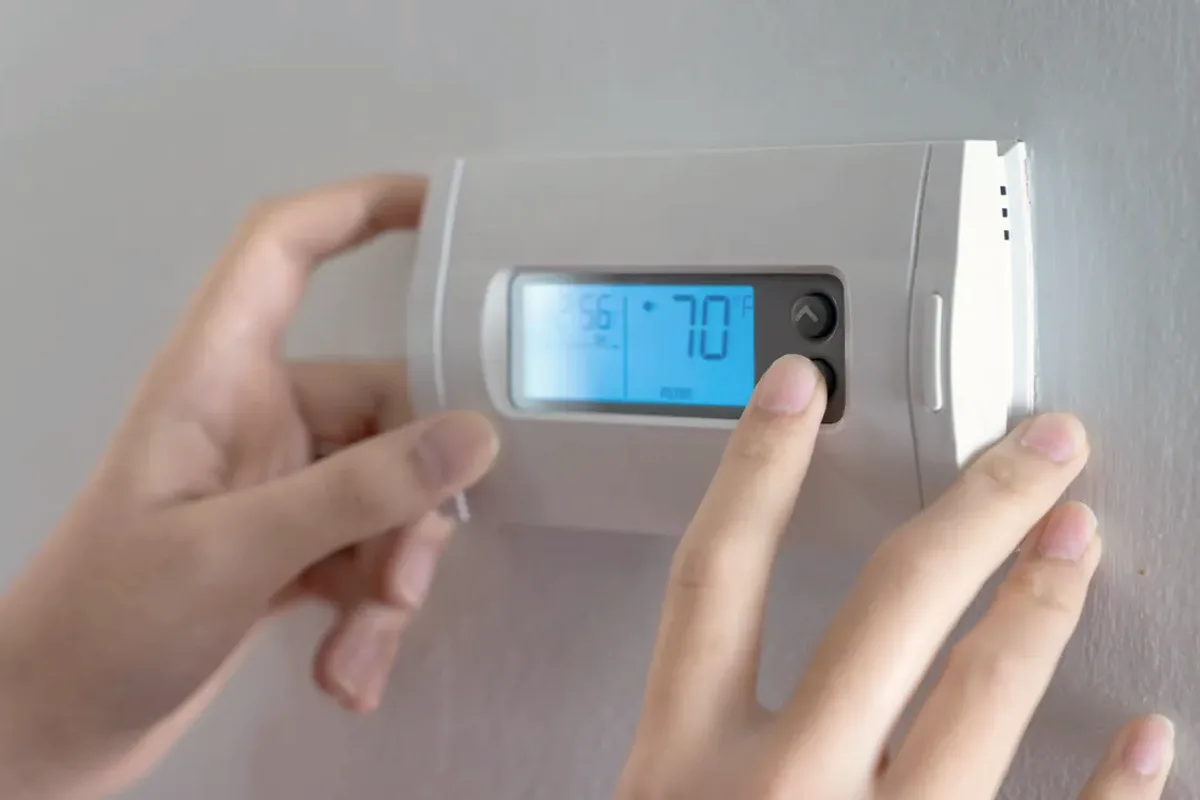
Request thermostat repair & replacement for a property in Paris. Include the equipment, the problem or planned work, and your location so the request can be reviewed.
What does the thermostat display, and which heating or cooling stages respond?
Thermostat service begins by checking whether the control itself is faulty or whether the heating or cooling equipment is not responding to a valid signal. A blank display, inaccurate reading, short cycling, or missing system mode can have different causes. Older controls, programmable models, and smart thermostats also differ in wiring and system compatibility. Diagnosis should consider the connected equipment and its stages before a repair is chosen or a replacement control is specified.
Note the symptom, the connected system type, and whether the problem affects heating, cooling, or both. Inspection may need to distinguish a thermostat sensor or control fault from wiring, transformer, or equipment control-board issues. A replacement must match the system's voltage, stages, and control requirements. Internal electrical diagnosis and wiring work should be handled by qualified personnel.
Thermostat display, sensor, calibration, and cycling symptoms
Wiring, transformer, and equipment control-board diagnosis
Compatibility with furnace, boiler, heat pump, and system stages
Assessment and Scope
Questions for the Proposed Work
01
Trace the control signal before replacing parts
A thermostat that does not turn on or reads inconsistently may have a sensor or control problem, but the signal path can also involve wiring, a transformer, or the equipment control board. Short cycling likewise needs diagnosis rather than an assumed thermostat replacement. Checking the connected system's response helps locate the fault. This distinction avoids treating a symptom at the display as proof that the thermostat itself has failed.
02
Match replacement controls to the equipment
A replacement thermostat must be compatible with the connected furnace, boiler, or heat pump, including its voltage, available stages, and control functions. A smart or programmable model is not automatically suitable for every system. The existing wiring and equipment requirements should be confirmed before selecting a control. Where an older thermostat is being replaced, its operating method and the system's control needs help define the required change.
03
Decide whether repair or replacement fits the findings
A confirmed sensor or connection fault may support repair, while a control that cannot operate the equipment's required stages may need replacement. Calibration findings, recurring symptoms, and compatibility matter more than age alone. After service, the control and equipment response should be checked in the relevant modes. Runtime information from a smart thermostat can describe operation, but does not replace diagnosis of the heating or cooling system.
Compare the next step
Trace each existing control to its appliance and zone before specifying a replacement. Ask whether a common control is supported or separate devices remain necessary. Define remote access and scheduling for each system, and require a demonstration that the agreed operating modes do not create conflicting commands.
Thermostat wiring is not universal. Do not connect wires by colour alone or work on energized wiring; a compatible control must be configured for the equipment it serves.